

“Troy is looking for you.”
Joe was a kidder—he turned the word ‘pepperoni’ into a running joke—but he did not traffic in sarcasm or irony; his jokes had an old-world bluntness to them. He said what was true, what needed to be said, and he did it with a smile and a slap on the back. But Joe wasn’t smiling now; his words were spoken solemnly, burdened by something heavy. Joe wasn’t kidding. But before the sentence settled and faded, Matt appeared to deliver the same omen.
“Troy is looking for you.”
Matt delivered the death knell in his usual deadpan, a tone easily mistaken for irony or sarcasm. He never burst into laughter; he merely smiled, the corners of his mouth tightening into a cherubic grin. Matt was not yet of drinking age; sarcasm and irony were trademarks of his generation’s humor. But there was one department Matt never joked about: the deli. Matt was a harbinger for Troy’s official message.
“Where did you go?”
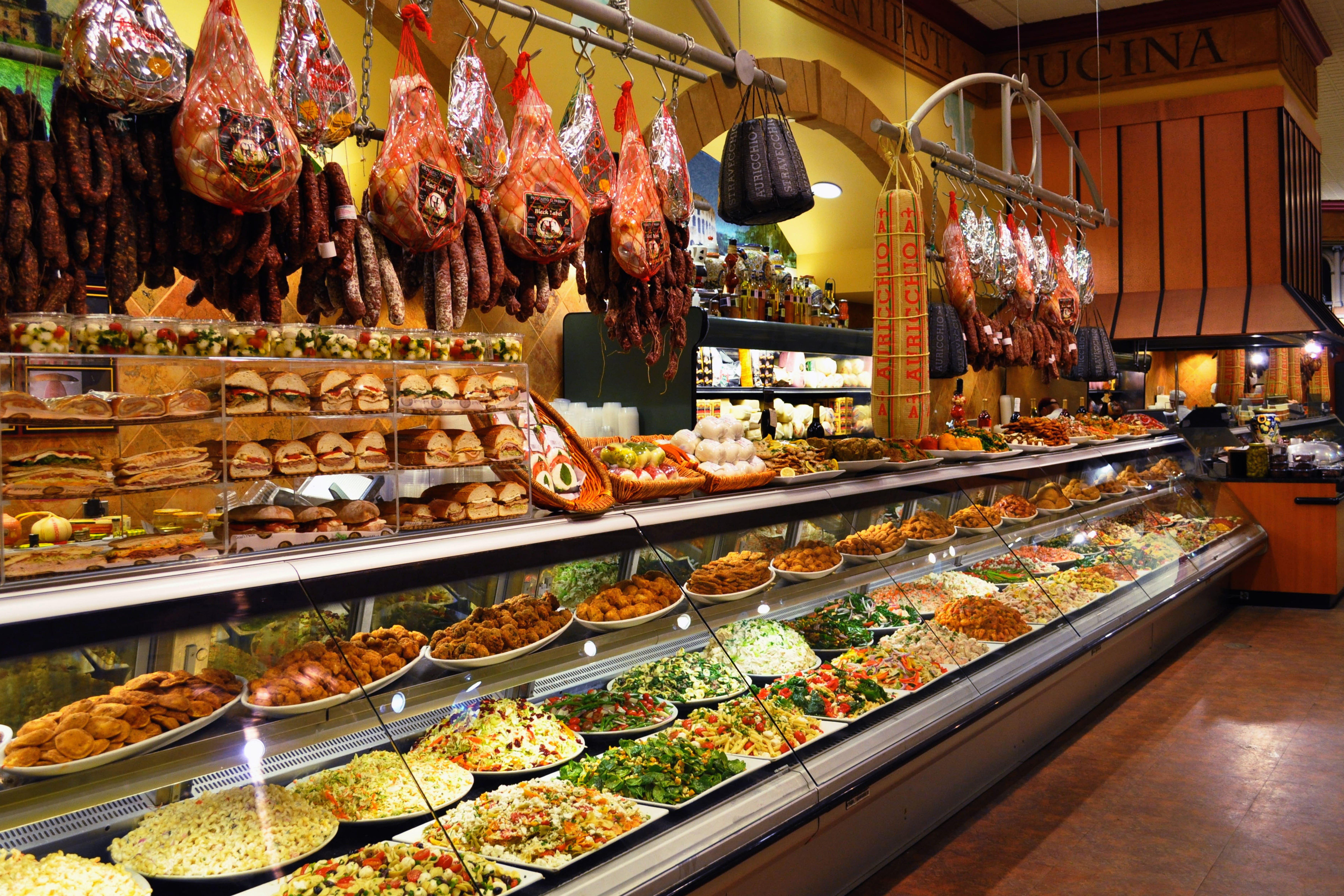
It was company policy that I inform my manager of my visits to the restroom. That way, if the managers needed me for a task—slicing prosciutto or stocking the soup shelf—they would not assume I had abandoned my post. This time, after labeling the soppressata, I decided to use the bathroom without Troy’s permission, without telling Matt or Joe or Jim. I could have given Matt an answer laden with too much information, an answer worthy of his question, but it was too late. Troy found me.
“Hey, Rob needs to talk to you,” he said. Troy only pulled the trigger; Rob was the one giving the orders.
Back in October, newly unemployed and applying to retail jobs online, I was summoned to the trailer in the parking lot of the new Italian grocery store opening down the street. Because I had experience driving, they wanted to give me a job delivering catering, but because I wanted to work part-time, they offered me a job at the deli counter instead. I got there after 3pm when high school was out for the day, and waited forty minutes as the high school kids, arriving after school, were interviewed first. Rob sat on the other side of the trailer, puffing his vape and wheeling and dealing over the phone, a blueprint of the store spread across the table in front of him.
Rob had a big personality. He was tall, heavyset, and on the younger side (early forties). He was a fast talker who overpowered conversations. Managing the newest Uncle Giuseppe’s was his big break, and he was ready to be the best. “Smiles for miles!” he shouted on Opening Day.
It was only in the past few weeks that Rob acknowledged my existence in the store. We made eye contact one morning as he puffed on his vape before the store opened, and he said, “What’s up, buddy?” I mumbled back my early morning one-word response—“hey”—but felt elated that the store’s manager had noticed I was still an employee, possibly worthy of interaction.
Summoned to the conference room, a place where my kind—the wage slave—rarely ventured except under ominous circumstances, I knew this was not going to be a promotion.
On the way up, Troy answered a customer call, calmly explaining that the customer’s requested heroes would not be available until next week. Troy loved the place with a devotional intensity. He loved being helpful and had plenty of blood on his hands from former employees who could not measure up in loyalty or stamina. His stepmother’s father was an owner, so Uncle Giuseppe’s wasn’t just employment; it was his destiny. Troy had started young and was rising quickly; he was a deli manager before turning 25. He was extremely competent, and I wondered why he settled for deli management when he seemed smart enough, tall enough, and dedicated enough to study finance. Troy knew more than me—he seemed to know everything. Uncle Giuseppe’s ran through his veins. I was merely passing through.
“Take a seat,” Rob smiled, extending his hand. He did not get up from his cushioned chair.
I knew why I was there. I had been working full-time (including weekends) since the store opened and demanded from Keith, the veteran deli manager, a return to part-time hours and didn’t give him give my reason: school—an attempt to claw my way toward something better. (It’s very possible we’d have reached a compromise with complete information.) I also hadn’t requested time off for my sister-in-law’s wedding until after the schedule was made. Keith informed that my requests “might not work,” and then the topic was dropped entirely. I scrambled to find a replacement for the shift. Jesus said he could take the shifts but later recalled he was already scheduled. There was nothing left for me to do except tell Keith I wouldn’t be showing up to work that day. The wedding was in Denver.
I had painted myself into an avoidable corner.
The week leading up to the meeting, I treated every moment like it was my last and made premature goodbyes to Jim and Alessandro warning them that my time was nearing its end, and there was no way out. I made extra trips to the walk-in refrigerator to peel the fat deposits from the roast beef, a delicacy I believed I would never enjoy again. I sampled every cold cut and casually popped sharp provolone cubes into my mouth as I scooped macaroni salad for the customers, the sharpness stinging my tongue, my mouth noticeably full.
Rob did not say, “What’s up, buddy” this time. He was friendly but did not address me by name; distance makes the dismissal easier. “Well, you’re coming up on your 90-day review.” Long enough to feel like an expert, short enough to feel disposable. “How do you think you’ve been doing?”
The job was not challenging. The only dread was the boredom of a slow shift. I answered honestly, hoping candor might count for something. “Besides my no-call, no-show day, I think I’ve been doing okay.”
Troy had changed the schedule and expected me to check it without warning. I didn’t. When I received his call on my first free Sunday since October, I accepted the write-up so I could watch the playoff game. In school, you receive the lesson first and then the test. In life, you receive the test first, and only afterward the lesson.
Rob nodded. He did not pretend to know what I meant.
“Well, we’ve decided to cut ties with you today. Nothing you did wrong. We can still write you a recommendation letter. But he needs someone full-time, and you can’t commit to that.” He motioned to Keith, who sat across from me saying nothing, his eyes drifting between the ceiling and the floor.
I didn’t want to beg for compromise. I wanted clarity. “I was hired part-time. Isn’t part-time three days?”
“Yeah. But he needs five.”
And that was that.
“Do I need to work the last fifteen minutes, or can I punch out?”
“Oh, you’re free to go now. Don’t worry about punching out. We’ll handle that. Just give us your hat and badge.” The ceremonial stripping of identity. No badge, no existence. Without a hat, I couldn’t very well sneak back into the walk-in later to peel the fat deposits from the roast beef.
As I stood to leave, I heard Troy through the door already discussing the next task: sandwiches for next week. No tears, no plaque, no memory. I liked Rob. Troy, not so much; he could be a wise-ass to me. Only I was allowed to be a wise-ass.
Standing strangely exposed, divested of my Uncle Giuseppe’s identity, I looked at the boys behind the counter. I hesitated, tempted to explain my demise, to assure them I might yet make something of myself. I did not want my name to be mocked in death the way that I mocked Brian’s.
But I couldn’t face the counter, the boys, the small world that had briefly tolerated me. My time at Uncle Giuseppe’s ended as such things often do—not with drama or defiance, but with administrative finality. An abrupt cancellation. A season ended before it could jump the shark.
I stood near the entrance instead as Mambo Italiano drifted from the speakers into my ears one last time. That song would haunt the quiet spaces between thoughts until, like me, the memory faded.